
Accept the trust of others, and be loyal to others. Efficient, confidential and secure. It's a matter of loyalty. Efficient, confidential and secure.
When Life Is in Doubt: 7 Things Private Investigators Can Do for You (Marriage Investigation and Legal Forensics Guide)
2026-01-23

In real life, most people don't think of the word "private investigator" when things are going well, but realize that the information in their hands is far from enough to make judgments when the marriage suddenly becomes cold, the partner's behavior begins to be inconsistent, and there are gaps in funds or information that cannot be explained. What many people are really afraid of is not the problem itself, but the feeling of powerlessness that "I doubt, but I can't come up with anything".
In the Chinese context, "private detectives" have long been in the gray gap between public opinion and law, on the one hand, the needs are real, and on the other hand, there are strict privacy protection and evidence legality requirements. For ordinary clients, what is really needed is often not a "stimulating tracking bridge", but a professional team that understands the boundaries of legal evidence collection, respects privacy rights, and can help sort out the evidence chain.
Therefore, it is more appropriate to understand that the compliance investigation team assumes the role of "professional catcher of information" and "preliminary collator of evidence", assisting you in seeing the situation and reducing decision-making errors in marital, commercial and civil disputes, rather than replacing judges, lawyers or public prosecutors and legal authorities. For service organizations like GAOGE, every marriage investigation and evidence collection, background verification, and civil evidence collection are to help the parties find a safer balance between truth and privacy, the right to know and personality rights.
The inexplicable sense of alienation in marriage
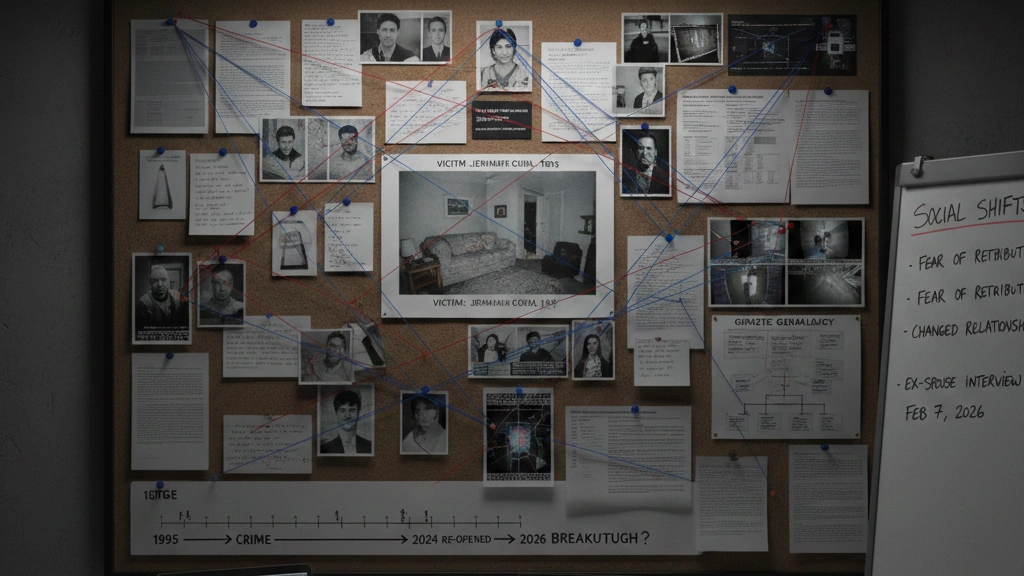
Many marital crises do not start from the moment of "grabbing the bag", but from the frequent overtime work but not being able to tell where it goes, chat records are always emptied, and the mobile phone never leaves the hand. Statistics show that China's divorce rate continues to remain at a high level, and marital fidelity has become one of the common problems of many urban families. In this state, partners often find themselves in a dilemma: continue to believe, fearing that they are too naïve; Choose to ask questions, but are afraid of pushing the relationship in a worse direction.
Many parties have experienced long-term mental exhaustion when they come to the marriage investigation agency: they are often not in a hurry to "turn their faces", but want to find out the facts first, and then decide whether to repair, divorce, or wait and see for the time being. An experienced investigation team will remind when assessing the needs that there are obvious legal risks in which evidence collection methods, such as eavesdropping, unauthorized access to the other party's call records, bank statements, hotel room information, etc., which may be suspected of infringing on citizens' personal information or other criminal offenses.
For marriage investigations, what is really valuable is not just "seizing evidence", but making it clear to the parties which evidence is more likely to be adopted in divorce proceedings, and which records are obtained in which ways, even if they seem to be "final", may be excluded by the court because of illegal evidence collection. According to the provisions of the Supreme People's Court on evidence in civil litigation, in order for evidence to play a role in court, it must have both authenticity, legality and relevance to the case.
Disturbing details in business collaborations
In the business world, the risks posed by information asymmetry are often much higher than they appear on the surface. In recent years, many places have reported cases of employee fraud, insiders colluding with external companies to obtain funds, and trade secrets leakage, resulting in the company's core R&D achievements being pushed to the market by rivals, and direct economic losses often amounting to millions. Many people in charge of small and medium-sized enterprises have similar feelings: before the problem, they always vaguely feel that something is wrong, but they can't tell the root cause or come up with clear evidence.
In this scenario, the significance of professional investigation is not to create "conspiracy theories", but to systematically sort out the chain of capital flow, business flow and personnel relationship through an external perspective, so that those abnormal behaviors hidden in the details can be presented. For example, when it is suspected that employees have privately set up affiliated companies and transferred customer resources, enterprises often need to combine multi-dimensional data such as public industrial and commercial information, bidding records, and online public opinion information to determine whether there is benefit transfer or malicious poaching by competitors, which is time-consuming and difficult for internal teams to maintain neutrality.
Compared with marriage disputes, the legal boundaries involved in commercial investigations are also clear: investigations cannot be conducted by stealing trade secrets or illegally obtaining personal information of others, otherwise they may violate the relevant provisions of the criminal law. The practice of compliance is to work around public information, legally authorized data and evidence forms acceptable to the court, and then cooperate with lawyers to check the formal elements and probative power of evidence. For companies, a reliable investigative firm is more like a "risk warning system" that helps determine whether it is necessary to initiate an internal audit or legal enforcement process, rather than acting as a sole "adjudicator".
Seven things a private investigator can do for you
1. Emotional and marital investigation: find a balance between truth and privacy
Emotional and marriage investigations are the most familiar and controversial areas of the public for "private detectives". On the one hand, the right to faithfulness in marriage and the right of one party to know the real situation of life together, and on the other end there is the right to privacy and personal dignity that everyone still enjoys in the marital relationship. From the perspective of judicial practice, when handling marital disputes, the court will not only consider the evidence collection efforts of one party to prove the other party's cheating or hidden property, but also exclude evidence that clearly violates privacy or is obtained in a serious illegal way, which means that the "result" cannot override the "method".
In terms of specific services, marriage investigation and evidence collection usually include: evidence collection around infidelity, ascertaining the whereabouts of the missing or long-term missing party, premarital background verification, etc. Taking evidence of infidelity as an example, when determining whether it constitutes statutory fault, courts generally pay more attention to evidence that directly reflects long-term stable cohabitation, bigamy, or serious violations of spousal rights, rather than just scattered chat records or ambiguous text messages. An experienced investigation team will remind the parties based on the actual situation: stealing wiretaps, hacking into each other's mobile phones, illegally retrieving house opening records and other behaviors are not only difficult to accept as legal evidence, but may also involve infringement of citizens' personal information or other illegal situations, and the risks are far higher than the expected benefits.
As far as premarital background verification is concerned, the phenomenon of "premarital background check" in society in recent years has caused widespread controversy, and many media have revealed the hidden personal information black market and privacy transaction issues behind it, reminding the public to be wary of unauthorized inquiries about household registration, credit investigation, bank statements and other highly sensitive data in the name of "premarital investigation". It is more prudent to base it on information available through public channels, such as whether the other party has a record of serious dishonesty, frequent prosecutions, records of major criminal cases, etc., combined with necessary interviews and fact-checking, rather than infinitely expanding the snooping into the other party's private life. Responsible agencies will emphasize that the original intention of marriage investigations is to protect the legitimate rights and interests of the parties, not to push the relationship to slip towards more intense confrontation.
2. Business and intellectual property investigation: providing an "intelligence base" for decision-making and risk control
Business and intellectual property investigations mainly focus on three directions: employee fraud investigation, in-depth analysis of the background and behavior of business counterparties, traceability of trade secret leakage, and anti-counterfeiting rights protection. With the increase in the digitalization of enterprises, the boundaries between internal and external risks have been continuously broken, from the traditional problem of "changing jobs and taking away customer lists" to maliciously plagiarizing product designs, stealing image copy, and falsifying brand sales pages through online platforms.
Employee fraud investigations often occur after "something feels wrong", such as a long-term mismatch between inventory data and sales records, a significant deviation from the market level but difficult to explain, and an unusually close financial relationship between external suppliers and internal stakeholders. At this time, what enterprises need is not emotional accusations, but to systematically sort out key positions, affiliated companies, and abnormal transaction records, and cooperate with the legal team to preserve relevant evidence when necessary, so that there is evidence to rely on in labor disputes or tort lawsuits. Anti-counterfeiting and rights protection emphasize the integrity of the chain of evidence, from online purchase records and logistics information to on-site inspections and sample appraisals, every step is related to the success rate of subsequent administrative complaints or civil lawsuits.
In this field, the value of the investigative agency is reflected in "finding out where the problem is" on the one hand, and "how to explain the problem clearly" on the other hand. In many cases, companies are not unaware that the other party is plagiarizing, piracy, or maliciously denigrating the brand, but lacks a complete system of self-supporting evidence, resulting in repeated setbacks in complaints and lawsuits. Compliant commercial investigations will build a chain of evidence by disclosing information, trial purchase and evidence collection, on-site verification and image data, and then convert the investigation results into evidence materials that can be understood and accepted by the court through lawyers, rather than staying at the level of "I think the other party must have a problem".
3. Tracing service: reconstructing the "clue map" in the complex information world
On the surface, the tracing service seems to be just "finding a person", but behind it is often connected to unresolved family debts, contractual responsibilities and even psychological trauma. There are three common needs: searching for missing relatives and friends, locating the debtor's whereabouts, searching for relatives after adoption, or finding the adoptee's original family. With the acceleration of population mobility and urbanization, many families often cross multiple cities or even national borders when their relatives are lost or lose contact for a long time, and it is difficult to build a complete information network on their own.
Unlike the "lost person" in criminal police, the search for people in the civil dimension often does not meet the criteria for police filing a case or long-term tracking, such as an old classmate who has not been contacted for many years suddenly becomes a key witness in a debt dispute, a former partner disappears with some assets, and a person who was adopted when he was young hopes to pursue clues about his life experience when he becomes an adult. In these scenarios, investigative work is more like a patient "puzzle of clues": trying to restring together the fragments of a person's life through public records, social information that may be associated, historical work, and residential footprints.
It should be reminded that tracing services also have clear legal boundaries. For people with a history of mental illness or suspected of being in a state of personal danger, family members should prioritize seeking help through formal channels such as the police, community, and medical institutions to ensure safety. For the tracing of debtors or persons involved in commercial disputes, the purpose of the investigation should be to legally defend their rights, such as serving legal documents, facilitating negotiations, or assisting the court in enforcement, rather than retaliation, online exposure, or nuisance. Professional institutions will fully communicate with the client at the beginning to confirm the purpose and use of the person, and if necessary, it is recommended to consult a lawyer first to avoid making decisions that may infringe emotionally.
4. Civil evidence collection: let "unclear" become "evidence that can be obtained"
In many civil disputes, the question is not "whether there is reason", but "whether there is evidence". Whether it is a debt dispute, tort damage, or contract performance dispute, the most common sentence of the parties is: "It is true, but I have no way to prove it." According to the civil procedure rules, "whoever claims, who provides evidence", the parties bear the burden of proof for their own claims or the facts of refuting the other party's claims, otherwise they will bear the adverse consequences of not being able to provide evidence. This means that if there is no trace in advance and no fixed evidence during the event, it will be difficult for the judge to make a judgment in his favor in court with only one word.
Civil evidence collection services usually focus on asset investigation in debt disputes, on-site evidence fixation of torts, and collation of transaction records during contract performance. Taking asset investigation as an example, the client often suspects that the other party "has property in his name but claims to be unable to repay", but it is difficult to grasp specific clues; At this time, the scope of information that can be legally obtained is limited, so it is more necessary for a professional team to assist in sorting out the existing clues to determine whether there are hidden property appearances, such as frequent transfer of assets to relatives, changes in the company's equity structure, etc., and then combine with lawyers to determine whether these clues can be used with reasonable property preservation or enforcement measures.
The same applies to the fixation of evidence of infringement. Whether it is personal injury, property damage, online defamation, or reputation infringement, the key is not whether the parties "feel hurt", but whether they can retain evidence that can be repeatedly tested in time, place, course of behavior and consequences. According to the Supreme People's Court's provisions on evidence in civil litigation, documentary evidence, physical evidence, audio-visual materials, etc. can be used as evidence, but evidence obtained in violation of prohibitive provisions of law or serious infringement of the legitimate rights and interests of others should be excluded. Therefore, the professional value of civil evidence collection lies in not only helping the parties fill the gaps in evidence, but also reminding the other party to avoid the trap of illegal evidence collection, so that the dilemma of "unreasonable and unfounded" occurs as little as possible.
5. Background verification: Add a safety valve to important choices
Whether it's getting married, deciding to start a business with a partner, or hiring an executive who holds the company's core resources, people are becoming more and more aware of the difficulty of "looking at people". According to public reports, some marital disputes and commercial fraud cases often stem from a serious lack of understanding of the other party's background: some people conceal major debts and negative credit records, some deliberately weaken their past criminal case experience, and some package themselves as "successful entrepreneurs", but in fact they have failed to start a business many times and are heavily in debt.
Background check services focus not on excessive prying into private life, but on factual information that is highly relevant to relationship security. For example, in the background verification of marriage partners, the focus usually includes whether the other party has a serious record of dishonesty, frequent prosecution, and whether it is involved in violent crimes. In the verification of business partners or executives, more attention is paid to the operating conditions of the companies they have worked for in the past, the degree of relevance to major violations, and whether there is a long-term execution record. This information mostly comes from legal public channels, such as court public judgment documents, enforcement information, administrative penalty information disclosed by market supervision departments, etc., and cross-comparison within the scope of compliance is enough to help clients look at an additional layer of risk before making major decisions.
It should be emphasized that background checks cannot and should not be turned into "unlimited life trials". At the legal level, "the law does not prohibit it", but matters involving personal privacy and personality rights, even if the law does not list them one by one, should follow the principles of necessity and moderation to avoid obtaining highly sensitive information through improper means, such as inquiring about bank statements, communication records, detailed itinerary positioning, etc. without consent. Responsible investigative agencies will explain to their clients that the purpose of background checks is to make important decisions more secure, not to encourage distrust or create panic, and to find a safer balance between controllable risk and respect for others.
6. Security Consulting and Counter-Investigation: When You Start to Suspect that You Are Being Targeted
In the era of high popularity of mobile Internet and smart devices, people's concerns about whether they will be monitored have increased significantly. The media has repeatedly disclosed the gray industry chain of illegally installing positioning equipment, privately selling eavesdropping equipment, and treating other people's communications and travel data as "commodities". For ordinary people and enterprises, once they suspect that they are being monitored abnormally and there is a risk of information leakage in the office environment, it is difficult to judge the problem based on personal intuition alone.
At its core, security consulting and counter-investigation services assess existing security vulnerabilities for individuals or enterprises through professional means, assisting in the investigation of anomalous monitoring or data breach channels. For example, conducting physical and electronic environment checks on important office areas, examining whether the authority management of sensitive information within the enterprise is too lax, and checking for non-compliant remote control software and external devices, provides management with a relatively clear risk map. For individuals, counter-investigations emphasize more on education and protection suggestions, such as how to avoid leaking privacy in unsecured network environments, how to identify common "location and track" scam claims, and when encountering suspected illegal surveillance, they should give priority to calling the police rather than dealing with it themselves.
In this area, the compliance boundaries are also very clear: all investigations and technical means must be based on legal authorization and reasonable purposes, and any act of providing illegal monitoring, monitoring, and candid photography services to third parties will touch criminal risks. Reliable institutions will remind clients to try to transform the anxiety of "worrying about being targeted" into actionable security governance: for example, improve internal systems, strengthen data permission management, and conduct compliance training for personnel in key positions, rather than indulging in the imagination of "enemies", making security issues a long-term psychological burden that consumes energy.
7. Other special investigations: from insurance fraud to online defamation
In addition to marriage investigation and evidence collection, commercial and civil evidence collection, there is also a type of "invisible battlefield" that seems to be scattered but is actually closely related to daily life, among which the more typical ones are insurance fraud investigations and online defamation traceability. In public reports, there are many cases of fraudulent insurance compensation by fictitious accidents, exaggerated injuries, and deliberate losses, which not only harms the interests of insurance companies, but also indirectly raises the average cost of ordinary policyholders.
The same is true of defamation and malicious attacks in cyberspace. A false negative post, an edited video, and an account that seems to be a "passerby" may all be an organized public opinion offensive and defensive battle. For individuals and businesses, how to strike a balance between protecting freedom of expression and protecting the right to reputation is a long-term issue; In extreme cases, malicious fabrication of facts, spread rumors and seriously damage the reputation of others may constitute insults, defamation and other violations or even crimes, and it is necessary to protect rights through legal channels. The role of the special investigation here is to assist in sorting out the information dissemination path, analyzing possible sources and related accounts, and providing clue support for subsequent lawyer letters, administrative complaints or civil litigation.
No matter what type of special investigation it is, one thing remains the same: any seemingly "efficient" shortcut, as long as it illegally obtains the privacy of others and violates the prohibitive provisions of the law, may backfire on the client itself in the future. A truly professional and trustworthy institution would rather spend more time explaining legal boundaries on the plan than break through the bottom line for the sake of temporary "results". For the parties, this restraint is precisely a long-term protection - not only to protect the rights and interests of today, but also to reserve a safe space for possible judicial proceedings in the future.
Private detectives are not "heroes in movies": boundaries, legitimacy, and real-life roles
To help you to the extent permitted by law
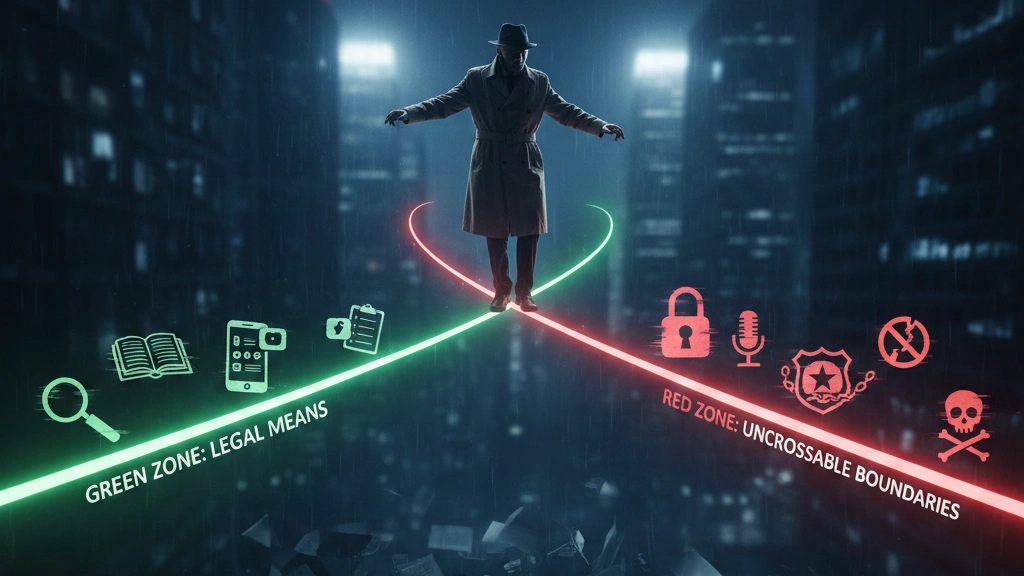
Under China's current legal framework, the subjects with clear investigative and evidence collection powers mainly include public security organs, people's courts, people's procuratorates, and lawyers who exercise their investigative powers in handling cases in accordance with the law. This means that any investigative activity must comply with the basic legal bottom line, especially not to illegally obtain citizens' personal information, not to wiretap and steal photos without authorization, and not to obtain evidence by means of violence or threats, otherwise not only will the investigator face criminal risks, but the client may also be held accountable for participating in or abetting related acts.
At the same time, the requirements for evidence in the field of civil litigation are becoming more and more detailed and standardized. The relevant judicial interpretations make it clear that when reviewing evidence, the people's courts will focus on the authenticity, legality, and relevance of the case, and shall exclude evidence obtained by infringing on the legitimate rights and interests of others or violating the prohibitive provisions of the law in accordance with the law. In other words, even if some "extreme means" do obtain seemingly powerful materials, as long as the method of obtaining them is obviously illegal, it is difficult to be adopted in court and may bring additional legal burden to the parties. This is why more and more rational clients choose to work with lawyers and legal and compliant investigation teams rather than blindly pursuing "thrilling" results.
| Role type | Primary powers/authority | Things to Do (Example) | What not to do (example) |
|---|---|---|---|
| Public Prosecutor's Office | enjoy the right to investigate, investigate and collect evidence, and take compulsory measures in accordance with the law | criminal investigation, interrogation, search, seizure, freezing, technical investigation, etc | arbitrary investigations beyond legal authority or in violation of procedures, private use of public power, etc |
| Lawyer | Investigate and collect evidence, read files, and interview in accordance with the law within the scope of the agency case | apply to the court for an investigation order, obtain information from relevant units in accordance with the law, etc | stealing information without permission, obtaining state secrets or privacy in an improper way, etc |
| Private Investigator/Investigative Firm | Based on the civil entrustment relationship, information is collected within the scope permitted by law | Combing public information, on-site visits, video recordings, preliminary collation of evidence, etc | Eavesdropping, illegal positioning, retrieval of call records/bank statements/room opening records, etc |
| Ordinary parties | Provide evidence of facts related to their own rights, apply for court investigation, etc | Save transaction records, take photos and videos, save transfer vouchers, etc | "Self-reliance" through illegal methods such as violence, threats, and candid filming and eavesdropping |
"Information catchers" and "evidence combers", not substitutes for the judiciary
From the perspective of the division of roles, the investigation agency is more suitable to be understood as a "professional catcher of information" and "combing through evidence", rather than a superhero in film and television works who can single-handedly handle, interrogate and even "justice". In marriage investigations, the findings often need to be evaluated by lawyers for their probative power in divorce proceedings. In commercial disputes, abnormal clues found in investigations need to be resolved through internal compliance procedures and judicial channels. This division of labor is not a limitation but a protection – it holds each party accountable within their familiar area of expertise, collectively serving an ending closer to the truth.
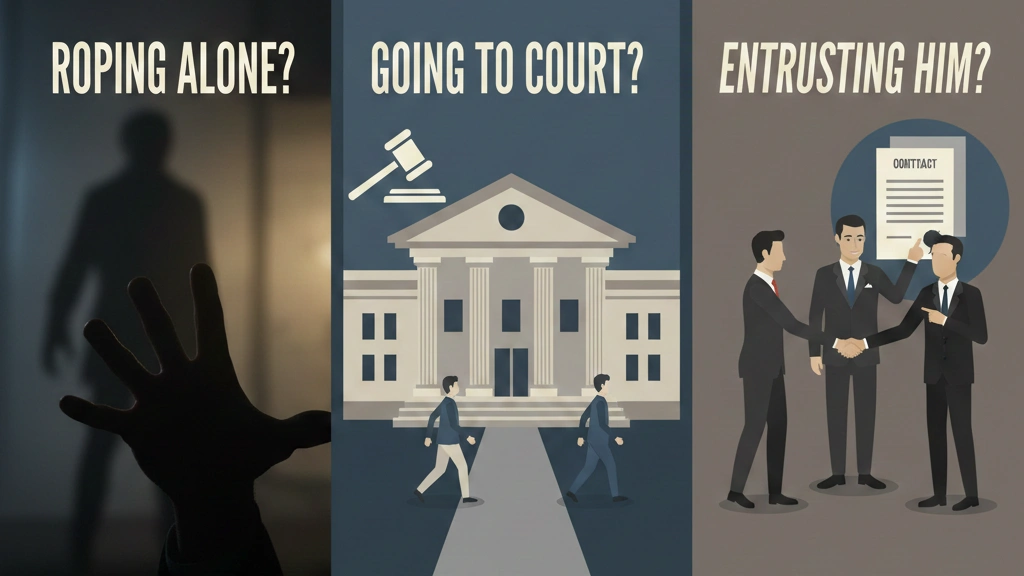
For clients, they can ask themselves three questions when choosing an institution: whether they adhere to the bottom line of legal evidence collection, whether they are willing to clearly explain the boundaries of evidence validity, and whether they respect your emotions and decision-making rhythm. Those who easily promise that "everything can be checked" and "all the privacy of the other party can be obtained" most likely mean that there is a risk of serious violations in their means, and once the situation escalates, it is likely to expose the client to the forefront first. Truly trustworthy institutions often remind you at the beginning of contact: even if something can be found, it may not be worth it; Some truths, even if they are clear enough, do not need to be pushed into public in the most drastic way.